%20(1)%20(1).png)
How to Stop Your Cat From Scratching Furniture: 8 Tips That Actually Help
If your cat has ever turned your couch, favorite chair, or even the corner of your rug into their personal scratching post, you’re not alone. Scratching is a completely normal part of being a cat, but that doesn’t mean you have to accept shredded furniture as part of the deal.
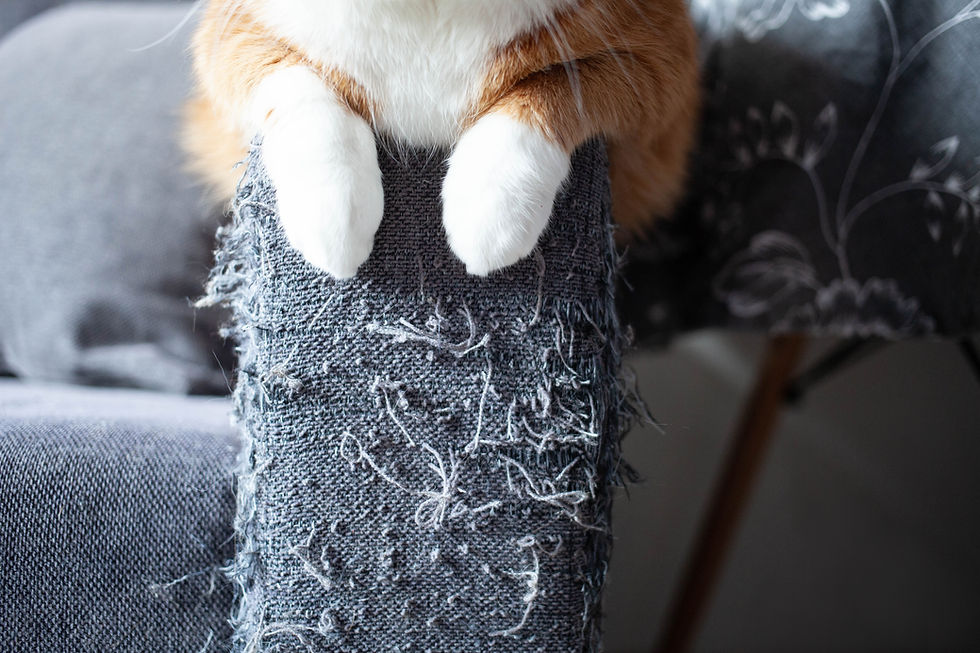
The good news is that you don’t need to stop your cat from scratching altogether. Instead, the goal is to give them appropriate places to scratch and make those options more appealing than your furniture.
So, why do cats scratch furniture in the first place? And how can you redirect the behavior without making your cat feel like they’re doing something wrong? Here’s what cat parents should know.
Why Do Cats Scratch Furniture?
Before you can stop your cat from scratching furniture, it helps to understand why they’re doing it.
Scratching serves several purposes for cats. It helps them stretch their bodies, maintain their claws, and release energy. Scratching also allows cats to leave both a visual and scent marker, which is one way they communicate and feel comfortable in their environment.
Your cat may also be more likely to scratch when they’re excited, stressed, bored, or simply looking for attention. That’s why you may notice them scratching the couch when you walk through the door or after a particularly energetic play session.
In other words, scratching isn’t bad behavior. It’s a natural behavior that needs to be redirected.
1. Give Your Cat a Scratching Post They Actually Like
One of the easiest ways to redirect your cat is to provide a designated scratching surface. But simply buying a scratching post and placing it somewhere out of the way doesn’t always work.
Cats can be surprisingly particular about what they like to scratch. Some prefer vertical scratching posts, while others like horizontal scratchers. Some enjoy rough materials like sisal, while others prefer cardboard or softer surfaces.
Try offering different types and see which one your cat gravitates toward.
The size and stability matter, too. A scratching post should be tall enough for your cat to fully stretch out if they like scratching vertically, and sturdy enough that it doesn’t wobble or tip over while they use it.
2. Put the Scratching Post Near the Furniture
If your cat has already decided that your couch is the perfect scratching spot, placing their new scratching post across the room probably won’t change their mind.
Instead, put the scratching post directly next to the furniture they’re scratching. Once they consistently use it, you can gradually move it to a more convenient location.
You can also place scratching surfaces near other areas where your cat naturally spends time, such as their favorite sleeping spot. Cats often like to stretch and scratch after waking up, so having a scratching post nearby can make it an easy choice.
3. Make the Scratching Post More Interesting
Sometimes your cat just needs a little encouragement to try something new.
Try playing with your cat near the scratching post or using a favorite toy to guide them toward it. You can also reward them with praise or a small treat when they use the appropriate scratching surface.
The goal isn't to force your cat to scratch. Instead, you want them to discover that their scratching post is an enjoyable place to be.
If your cat loves catnip, sprinkling a small amount on a scratching post can also make it more enticing.
4. Make Your Furniture Less Appealing
While you're making the appropriate scratching areas more attractive, you can also make the furniture less appealing.
For example, temporarily covering a favorite scratching spot with a blanket or furniture cover can change the texture and make it less satisfying to scratch. You can also rearrange the area if possible to make it harder for your cat to access their usual scratching spot.
This doesn't have to be permanent. Once your cat becomes comfortable using their designated scratching areas, you may be able to remove the coverings.
5. Don't Punish Your Cat for Scratching
It can be frustrating to discover another set of claw marks on your furniture, but punishment isn't the answer.
Your cat isn't scratching the couch to annoy you. They're following a natural instinct, and yelling or punishing them can create stress without teaching them where they should scratch instead.
Instead, calmly redirect them to their scratching post or another appropriate surface. Reward them when they use it, and be consistent.
6. Keep Your Cat's Nails Trimmed
Regular nail trims won't stop scratching, but they can help minimize the damage your cat's claws cause to furniture and other surfaces.
If your cat isn't comfortable having their nails trimmed, start slowly. Let them get used to having their paws handled before attempting a full nail trim. You can trim just one or two nails at a time and gradually work up to more.
If you're unsure how to trim your cat's nails safely, your veterinarian or professional groomer can show you how.
7. Make Sure Your Cat Gets Enough Play and Enrichment
A cat who is bored or has excess energy may be more likely to find their own ways to entertain themselves, and sometimes that means attacking the furniture.
Regular play and enrichment can give your cat appropriate outlets for their natural behaviors. Interactive toys, puzzle feeders, climbing spaces, and opportunities to chase and pounce can all help keep them mentally and physically engaged.
Try incorporating a few short play sessions throughout the day rather than relying on one long session. Even a few minutes of interactive play can give your cat an opportunity to burn off energy and engage their natural instincts.
8. Be Consistent
Learning how to stop a cat from scratching furniture isn't usually an overnight process.
If your cat has been scratching the same couch for years, they're unlikely to immediately switch to a scratching post just because you placed one nearby. Give them time to develop a new habit, and make sure everyone in your household responds to the behavior in the same way.
Keep appropriate scratching surfaces accessible, reward your cat for using them, and continue redirecting them when necessary.
Eventually, your cat should start to understand which surfaces are theirs to scratch.
Give Your Cat a Better Place to Scratch
Scratching is an important part of your cat's physical and mental well-being, so the goal isn't to eliminate the behavior. It's to give them a place where they can scratch, stretch, and do what comes naturally without destroying your furniture.
With the right scratching surfaces, a little encouragement, and some patience, you can protect your furniture while still letting your cat be a cat.
And remember: if your cat is scratching the couch, they're not being naughty. They're just being a cat. The trick is helping them find a better place to do it.


Comments