%20(1)%20(1).png)
From Lions to Living Rooms: Wild Instincts That Still Shape Your Cat’s Behavior
- Feb 16
- 3 min read
Although domestic cats live comfortably indoors, their behavior is still deeply influenced by their wild ancestors. Modern house cats share many instincts with big cats like lions, leopards, and tigers, even if those instincts now show up in much smaller and subtler ways. Understanding these natural behaviors can help explain why cats act the way they do and how to better support their needs in a home environment.
Hunting Instincts and Play Behavior
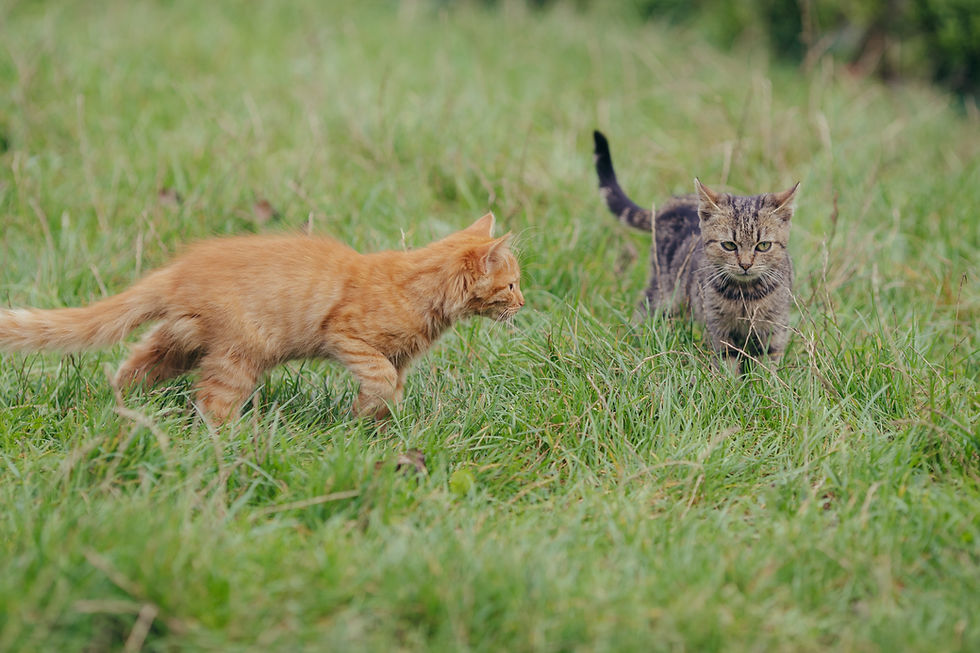
Big cats spend a significant portion of their time hunting or preparing to hunt. While your cat does not need to catch prey to eat, the instinct to stalk, chase, and pounce remains strong. This is why play often looks intense or repetitive, especially during short bursts of energy.
Interactive play that mimics hunting behavior is especially satisfying for cats. Toys that encourage chasing, hiding, and quick movement help fulfill this instinct in a safe and appropriate way. Without these outlets, cats may redirect that energy toward feet, hands, or household objects, which can be frustrating for both cats and their owners.
Sleep Patterns Rooted in Survival
Large wild cats are known for sleeping many hours a day, conserving energy between hunts. Domestic cats follow a similar pattern, often sleeping for most of the day with periods of alertness in the early morning and evening. This schedule reflects a natural crepuscular rhythm rather than laziness.
Where cats choose to sleep also reflects instinct. Elevated surfaces, hidden corners, or quiet areas offer a sense of safety and control over their surroundings. These choices mirror the way wild cats select resting spots that allow them to observe their territory while remaining protected.
Territory, Scent, and Routine
Territory is central to feline behavior. In the wild, cats rely on scent marking and routine to establish safe boundaries. Domestic cats use similar methods within the home, rubbing against furniture, scratching surfaces, and following consistent paths through familiar spaces.
Routine helps reinforce a sense of stability. Feeding times, sleeping locations, and bathroom habits often follow predictable patterns because consistency reduces stress. When changes occur, such as moving furniture or introducing new pets, cats may react by becoming more cautious or clingy as they re-establish their sense of territory.
Bathroom Habits and the Need for Privacy
In the wild, choosing a bathroom location is a matter of safety. Cats seek areas that allow them to use the bathroom discreetly while still remaining aware of their surroundings. This instinct explains why many cats prefer clean, quiet, low traffic litter areas.
Litter preferences are often tied to texture, scent, and cleanliness. A cat avoiding the litter box may not be acting out, but responding to an environment that no longer feels secure or comfortable. Understanding this instinct helps reframe bathroom issues as communication rather than misbehavior.
Everyday Behaviors Linked to Wild Instincts
Many common house cat behaviors can be traced directly back to survival instincts. Some of the most recognizable include:
Stalking or pouncing during play
Kneading soft surfaces as a comfort behavior
Scratching to mark territory and maintain claws
Seeking high or hidden resting spots
Preferring routine and predictability
Seeing these behaviors as instinctual can help reduce frustration and encourage more supportive responses.
Understanding that house cats still operate with wild instincts allows owners to create environments that better meet their needs. Providing opportunities for play, maintaining consistent routines, and respecting a cat’s desire for privacy all contribute to emotional well being.
Rather than trying to eliminate instinct driven behavior, the goal is to accommodate it in ways that fit safely into indoor life. When cats are given outlets that align with their natural tendencies, they are more likely to feel secure, confident, and content in their surroundings.


Comments