%20(1)%20(1).png)
Cat Whiskers Meaning: What Your Cat's Whiskers Reveal About Their Mood
Cats communicate in subtle ways, and their whiskers are one of the most overlooked parts of feline body language. While many pet owners focus on a cat's tail, ears, or vocalizations, whiskers can provide valuable clues about how a cat is feeling in a particular moment. Understanding cat whiskers' meaning can help you better interpret your pet's emotions and respond appropriately to their needs.
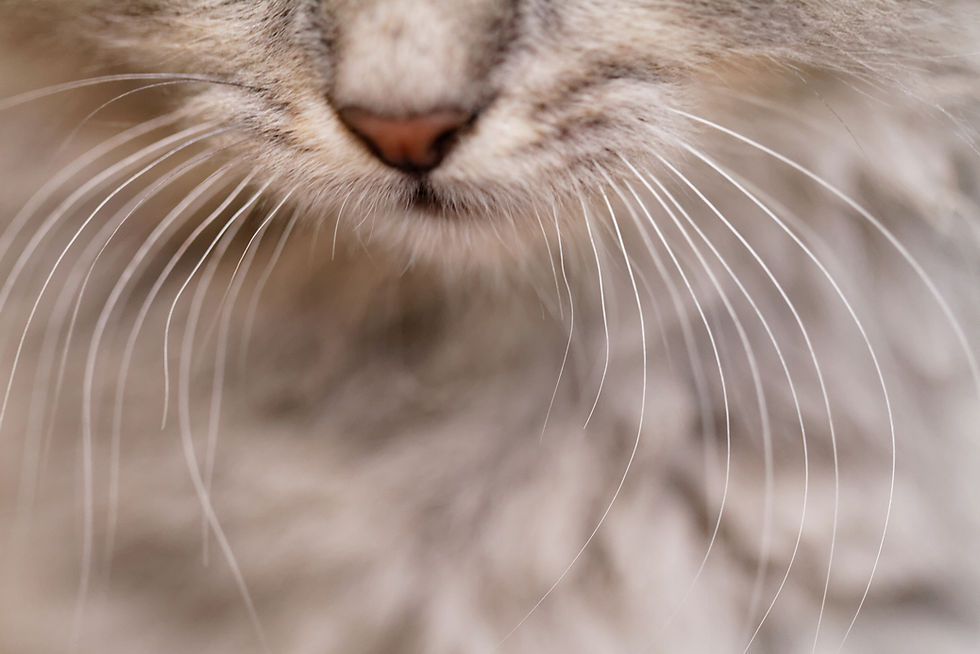
By paying attention to whisker position alongside other body language signals, you can often tell whether your cat is relaxed, curious, fearful, or stressed.
Why Do Cats Have Whiskers?
Whiskers, also known as vibrissae, are specialized sensory hairs that are much thicker and more deeply rooted than ordinary fur. They are connected to sensitive nerve endings that help cats gather information about their surroundings.
Cats use their whiskers to detect nearby objects, navigate tight spaces, judge distances, and sense subtle changes in air currents. These sensory tools play an important role in a cat's daily life, which is why whisker position can also reflect changes in mood and emotional state.
Forward-Facing Whiskers Often Signal Curiosity
When a cat's whiskers are pushed forward toward an object, it typically indicates interest and engagement. You may notice this when your cat is investigating a new toy, watching a bird outside the window, or approaching something unfamiliar.
Forward whiskers help a cat gather more information about what has captured their attention. This posture is often accompanied by focused eyes, alert ears, and an attentive body stance.
In many cases, forward-facing whiskers are a sign that your cat feels confident and curious about their environment.
Relaxed Whiskers Usually Mean a Relaxed Cat
When a cat is calm and comfortable, their whiskers generally rest in a neutral position along the sides of the face. They are neither pushed dramatically forward nor pulled tightly backward.
You might observe relaxed whiskers when your cat is napping, lounging in a favorite spot, or enjoying a quiet moment with family members. Combined with soft eyes and a loose body posture, neutral whiskers are often a reliable indicator that your cat feels safe and content.
Pulled-Back Whiskers Can Indicate Fear or Anxiety
Whiskers that are flattened or pulled back against the face often signal discomfort, fear, or stress. Cats may instinctively draw their whiskers backward when they feel threatened or overwhelmed.
This whisker position is commonly seen during veterinary visits, loud noises, encounters with unfamiliar animals, or other situations that cause anxiety. If you notice your cat's whiskers pulled back, look for additional signs such as flattened ears, a crouched posture, dilated pupils, or attempts to hide.
Recognizing these signals early can help you reduce stress and give your cat space when needed.
Whiskers During Play and Hunting Behavior
Whiskers frequently move forward during play sessions because the same instincts used for hunting are activated. Whether your cat is chasing a feather wand or stalking a toy mouse, forward whiskers help them gather information about their target.
This posture is usually accompanied by focused concentration, crouching, and quick body movements. In these situations, forward whiskers are not a sign of aggression but rather excitement and engagement.
Understanding Whisker Stress
Some cats experience what's commonly called whisker stress or whisker fatigue. This occurs when the whiskers are repeatedly stimulated by contact with narrow food bowls, tight spaces, or other environmental factors.
Although research on whisker fatigue is still limited, many cat owners report that their pets seem more comfortable using wide, shallow food and water dishes. Cats that hesitate to eat from deep bowls or frequently paw food out of their dishes may be reacting to excessive whisker contact.
Providing appropriately sized bowls can help create a more comfortable feeding experience.
Common Myths About Cat Whiskers Meaning
Several misconceptions surround cat whiskers' meaning, and understanding the facts can help owners avoid confusion.
One common myth is that whiskers only help cats maintain balance. While whiskers provide valuable sensory information, they are not solely responsible for balance. A cat's inner ear and other sensory systems also play major roles.
Another myth is that trimming whiskers is harmless. Because whiskers are important sensory tools, cutting them can interfere with a cat's ability to navigate and interpret their environment.
Some people also believe whiskers move independently without any connection to mood. In reality, whisker positioning often reflects both environmental awareness and emotional state, especially when considered alongside other body language signals.
Reading the Whole Cat, Not Just the Whiskers
While whiskers can offer valuable insight, they should never be interpreted in isolation. A cat's mood is best understood by looking at the complete picture, including ear position, tail movement, posture, facial expression, and behavior.
For example, forward whiskers paired with playful body language likely indicate curiosity or excitement. Forward whiskers combined with a stiff posture and intense stare may suggest heightened arousal or defensiveness.
The more body language cues you observe together, the more accurately you can understand what your cat is trying to communicate.
Whiskers do far more than make cats look adorable. They serve as highly sensitive tools that help felines navigate their world and express their emotional state. By learning to recognize different whisker positions, pet owners can gain a deeper understanding of their cat's feelings and behavior.
Whether whiskers are relaxed, pushed forward, or pulled back, they offer important clues about what a cat may be experiencing in the moment. Combined with other body language signals, whiskers can help strengthen the bond between cats and the people who care for them.


Comments